Born On: June 15, 1937
Born In: Bhingar, Bombay Province
Career: Social Activist
Nationality: Indian
His only motive in life lies in service of his fellow humans. His fight against corruption has been basically targeted at uplifting the poor and downtrodden conditions prevailing in rural India. His supporters call him "Second Gandhi". He is Anna Hazare, an ex-army man and a social activist, recognized and celebrated for his undying support for the citizens of India to serve them and fight for them against greed and corruption. His journey of four decades, right from a tenacious army soldier to a social reformer, is regarded as an unprecedented campaign of resurrecting India as a strong nation. By upgrading the ecology and economy of the Ralegan Siddhi village, sited in drought-prone Ahmednagar district of Maharashtra state, Hazare has played a significant role in transforming this poverty clad hamlet into one of the richest villages in India. Recently, he has earned name and fame for fighting for the implementation of the Jan Lokpal Bill, the anti-corruption bill drafted by his crusaders to deal with the corruption prevalent in the government of India at the highest level.
Early Life
Anna Hazare was born as Kisan Baburao Hazare to Baburao Hazare, an unskilled laborer in Ayurveda Ashram Pharmacy, in the village of Bhingar near Hinganghat city in Bombay Province, presently in Maharashtra. After his grandfather's death in 1945 who served in the Indian army, his father continued working in Bhingar till 1952, after which he resigned and returned to his ancestral home in Ralegan Siddhi. Due to financial hardships, Anna Hazare was looked after by his childless aunt who took him to Mumbai and funded his education. Here in Mumbai, he studied till class seven and took up employment to support his family. A job that started as selling flowers in Dadar culminated into owning a flower shop and calling upon two other brothers to Mumbai.
Service in the Indian Army
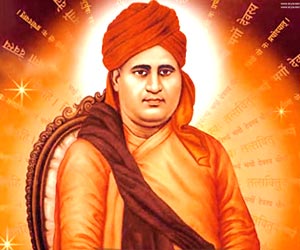
The Indian soldiers who turned martyrs in the Indo-China War of 1962 urged the government to recruit young Indians in the Indian army on emergency basis. Highly inspired by patriotism and love for his country, Anna Hazare joined the Indian Army in 1963, despite not fulfilling the physical requirements. Here began his career as an Indian army soldier, starting as a truck driver, after successful training at Aurangabad in Maharashtra. When Pakistan attacked India in 1965, he was posted at Khem Karan border, where all his comrades turned martyrs, but Anna managed to survive a close shave as a bullet just passed by his head. This incident forced him to think upon the existence of humans and meaning of life and death. Swami Vivekananda proved to be a great inspiration for him, post reading the small booklet "Call to the youth for nation building" he found at a book stall at the New Delhi railway station. It was at this point that he decided to dedicate his entire life for serving humanity. He was just 26 at that time. However, having completed only three years in the army would not have made him eligible for the pension scheme, which is why he continued to serve in the army for 13 long years, after which he took voluntary retirement from the army in 1975 and returned to his native place, Ralegan Siddhi. During his tenure as a soldier, he served in different states, like Sikkim, Bhutan, Jammu & Kashmir, Assam, Mizoram, Leh, and Ladakh.
Upliftment of Ralegan Siddhi
During his tenure in the Indian Army, Anna Hazare visited Ralegan Siddhi every year for two months and was highly moved by the miserable condition of the farmers residing there. On retirement, he went back to this drought-prone and rain-shadow zone of Ahmednagar district and pledged to develop the village. He came across the novel project of water management through watershed development undertaken by Vilasrao Salunke, a resident of Saswad near Pune. Motivated by the project, he decided to implement the same in his village to eradicate water scarcity. The project was successful in increasing the ground water level and providing water to 1500 acres of land, instead of the meager 70 acres previously. As a result, the farmers produced good yield of food grains and the village became self-sufficient. Eventually, Anna Hazare brought about several economic changes leading to establishment of a school, a temple, a hostel, and other buildings. Mass marriages, Grains Bank, dairy, cooperative society, self-help group for women, and youth mandals followed next to give the village a new and improved face. This village became a model village for numerous other oppressed villages, and has been regarded as a tourist spot for people from across the country till date.
Social Life
Bhrashtachar Virodhi Jan Aandolan (BVJA), or People's Movement against Corruption, was started by Anna Hazare in 1991 as an attempt to fight against corruption that was blocking rural development in India. Hunger strikes became his tool of protest with high-profile politicians being his target. The movement found 42 forest officers guilty for duping hundreds of crores through corruption. Even though Anna Hazare handed over the evidences to the government, the government was reluctant in taking action against the culprits since some officers of the ruling party were themselves involved in the scam. Distressed and heart-broken, Anna Hazare protested and was imprisoned, a step that was supported by all social activists and political leaders of all parties, except BJP and Shiv Sena. To force the government raise charges against another set of political leaders, he began his fast unto death on August 9, 2003, which ended on August 17, 2003 with the then chief minister Sushil Kumar Shinde forming a one-man commission to find evidence against the convicts.
Right to Information Movement
Envisioning that action against fraudulent ministers and officers was not sufficient to fight back corruption, Anna Hazare campaigned for the Right to Information Act in 1997 which was turned down by the state government. To protest against the result, he agitated at Azad Maidan in Mumbai and then traveled across the state to create mass public awareness. Realizing that the government has turned blind, he went on an indefinite hunger strike in July 2003. His protest compelled the President of India to sign the draft of the Right to Information Act after 12 days of hunger strike. The act was put to order with effect from 2002 and formed the base for the National Right to Information Act, 2005.
Lokpal Bill Movement
The most touted protest among all the remonstrations campaigned by Anna Hazare against the Indian government is the Lokpal Bill Movement, or People's Ombudsman Bill, which was initiated in April 2011. This anti-corruption bill was drafted by N. Santosh Hegde, a former justice of the Supreme Court of India and Lokayukta of Karnataka; Prashant Bhushan, a senior lawyer at the Supreme Court; and Arvind Kejriwal, a social acitivist, along with other members of the India Against Corruption movement. The bill included more stringent provisions and wider power than the Lokpal Bill prepared by the government in 2010. In support of getting the bill approved, Anna Hazare began his fast unto death on April 5, 2011 at Jantar Mantar, New Delhi, after his demand for a more independent Jan Lokpal Bill was rejected by the Indian Prime Minister, Manmohan Singh.
Hazare's hunger strike and anti-corruption campaign was supported by thousands of people and social activists, such as Medha Patkar, Arvind Kejriwal, former IPS officer Kiran Bedi, and Jayprakash Narayan. The hunger strike ended on April 8, 2011 after the government agreed to give into the demands. Prime Minister, Manmohan Singh stated that the bill would be re-introduced in the monsoon session of the Parliament. This resulted in the issue of a notification in the Gazette of India on April 9, 2011 to form a joint committee, comprising of five nominee ministers of the Government of India and five nominees of the civil society. The five nominee ministers of the Government of India included Pranab Mukherjee, P. Chidambaram, M. Veerappa Moily, Kapil Sibal, and Salman Khursheed. From the civil society Anna Hazare, N. Santosh Hegde, Shanti Bhushan, Prashant Bhushan, and Arvind Kejriwal, represented as the five nominees.
Meanwhile, on 5 June 2011, Swami Ramdev and his followers went on a hunger strike against the issues of black money and corruption, doubting seriousness of the government in taking measures to eradicate corruption. But they were forcibly evicted from the Ramlila Maidan by Delhi Police. As a retort, Anna Hazare and other civil society members boycotted the meeting of the joint Lokpal Bill drafting committee scheduled on June 6, 2011. They even asked the government to make its stand on the contentious issues related to the proposed draft legislation public. The group also declared that the future meetings would be attended only if they were telecast live. What followed next was the grand march on June 8, 2011 at Rajghat, wherein Anna Hazare threatened to go on an indefinite hunger strike, if the government tried to discredit the joint Lokpal Bill drafting committee and did not pass the bill.
On July 28, 2011, the union cabinet approved a draft of the Lokpal Bill, but what came out was a weak version of the original proposed bill. Not only did the government version kept the Prime Minister, judiciary and lower bureaucracy out of the ambit of the proposed corruption ombudsman Lokpal, but the drafted bill limited the powers of Lokpal to being just an Advisory Board. It stated that the Lokpal would have no police powers and no ability to register an FIR or proceed with criminal investigations. Furthermore, the drafted Lokpal bill affirmed that the Lokpal would have no power to initiate suo motu action or receive complaints of corruption from the general public. It could only probe complaints forwarded by the Speaker of the Lok Sabha or the Chairman of the Rajya Sabha. Eventually, as expected, Hazare rejected the government version of the bill and avowed that he would go on an indefinite fast from August 16, 2011 at Jantar Mantar if the government introduced its own version of the bill in Parliament without taking suggestions from civil society members
Just four hours before the planned hunger strike on August 16, 2011. Anna Hazare was arrested and imprisoned at Tihar Jail, though he started his fast inside the jail itself. Although he was granted judicial detention after 24 hours, he refused to come out, asking the government to approve of his demands for an unconditional permission to fast at Jaiprakash Narain Park. Also, he accepted neither of the two proposals laid down by Delhi Police, which were either stage a fast for a maximum of three days with a limited number of supporters (5, 000) or return to his hometown in Maharashtra. Rejecting both the proposals, Hazare preferred to remain in the Tihar Jail until his demands were met, saying he would leave the jail only if the government unconditionally allowed his protest for a stronger Lokpal Bill. Succumbing to the mounting pressure, the government of India has agreed for a 15-day fast at the Ramlila Ground, with no limitation on the number of supporters. Reportedly, a huge mass of supporters is expected to be at the Ramlila Ground to proffer their support towards this willful and determined social activist and India's "second freedom struggle" in terms of Anna Hazare.
Awards & Recognition
Indira Priyadarshini Vrikshamitra Award, 1986
Krishi Bhushana Award, 1989
Padma Shri, 1990
Padma Bhushan, 1992
Shiromani Award, 1996
Mahaveer Award, 1997
CARE International Award by CARE relief agency, 1998
Integrity Award by Transparency International, 2003
Honorary doctorate by Gandhigram Rural University, 2005
Jit Gill Memorial Award by World Bank, 2008
Timeline
1937: Born in Bhingar, Bombay Province
1952: Went to Bombay with his aunt
1963: Selected as a truck driver in the Indian Army
1965: Survived the air attack by Pakistan during Indo-Pakistani War
1975: Voluntarily retired from the Indian Army
1990: Felicitated with the Padma Shri
1991: Launched the Bhrashtachar Virodhi Jan Aandolan (BVJA)
1992: Received the Padma Bhushan
1997: Campaigned for the Right to Information Act (RTI Act)
2003: Began an indefinite hunger strike to get the RTI Act approved
2003: Went on a fast unto death from August 9 to August 17 as a protest against corrupt political leaders
2011: Initiated the Jan Lokpal Bill in April
2011: Arrested on August 16 before heading for the indefinite fast and imprisoned